November 15, 2025
Read time: 8 minutes
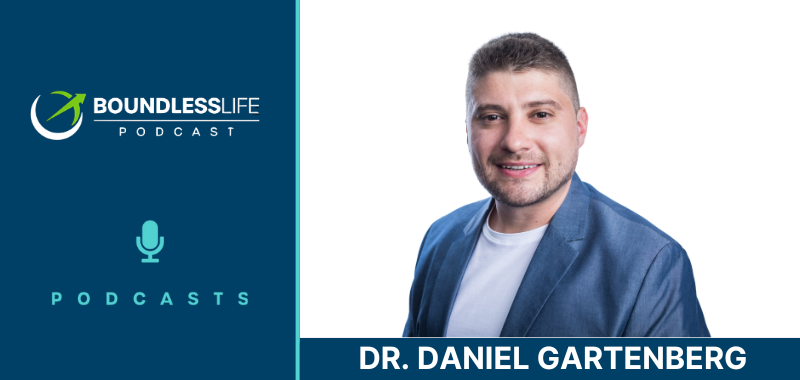
What I Discuss with Dr. Daniel Gartenberg:
- Poor sleep after a date night and the physiological reasons alcohol impacts sleep quality, plus how heavy meals can worsen awakenings and disrupt deep sleep….02:49
- Different types of alcoholic beverages and why some disturb sleep worse than others…05:50
- Irregular bedtimes and early school schedules can disrupt young people’s sleep cycles, often leading to chronic issues unless addressed…07:04
- Why teenagers naturally become “night owls,” and the impact of artificial light, stress, and school schedules on adolescent sleep timing…11:36
- The six validated reasons all animals—including humans—sleep, from energy conservation to clearing brain waste…14:32
- Cooling devices, temperature regulation, and what the science actually says about getting better sleep through temperature…16:28
- The science behind why warming your feet or hands can paradoxically help your core temperature drop—making sleep come faster and easier…21:46
- How napping can boost performance for some, why others should avoid it, and the logic behind sleep restriction therapy…25:51
- The groundbreaking practice of associating sensory cues with learning, then replaying them during specific sleep stages to enhance memory…29:08
- How the SleepSpace “smart bed” and phone sensors are designed for seamless, wearable-free sleep measurement and privacy…36:44
- Why blue light and device distractions undeniably disrupt sleep, and how airplane mode, red lights, and healthy phone habits help…40:21
- CBT-I (Cognitive Behavioral Therapy for Insomnia) addresses the root causes of insomnia better than drugs, using proven techniques like stimulus control, sleep restriction, and cognitive restructuring…49:24
- Sleep apnea, why diagnosis is missed, the merits and drawbacks of CPAP, and why personalized medicine matters…57:33
- The links between oral posture, airway health, and new strategies like mouth taping and nasal cleaning…1:01:47
- Evidence for magnesium, GABA, CBD, melatonin, prescription medications, and their nuanced impact on sleep architecture…01:13:36
- SleepSpace app features, customizing evening light, and considerations when sleeping with pets or partners…1:17:17
Dan is a sleep scientist with a Ph.D. in cognitive psychology, currently the CEO of SleepSpace, and an adjunct professor at Penn State University in the Department of Biobehavioral Health. With 15 years under his belt developing sleep technology, and a resume working for artificial intelligence groups in the Navy and the Air Force, Dan has garnered more than $3.5 million in grant awards from the National Science Foundation and the National Institute of Aging. The purpose? To address a problem that affects not just the developed world, but billions around the globe: poor sleep quality.
Dan's stated magnum opus is to develop the ultimate connected smart bedroom where natural remedies like sound, light, and vibration are used synergistically with various wearables and “nearables” (small, wireless devices in the room not attached to you) to diagnose and treat sleep disorders and improve the sleep quality of every human being.
His current focus is on improving insomnia and sleep apnea outcomes, which contribute to Alzheimer’s disease and heart disease. The digital health technology created by Dan and his team is currently not for medical use, meaning it is available to the general public. People like you or me can access direct interventions on a nightly basis, including the best meditations to stop a racing mind, a network of coaches who specialize in all aspects of sleep, and the Dr. Snooze AI, which features in the SleepSpace app.
As an inventor with five patents, Dan is a highly innovative creator with a superior understanding of sleep disorders compared to the vast majority of other experts. With over 10 peer-reviewed publications and a viral TED Talk with over 5 million views, Dr. Gartenberg and his technology have been featured on The Today Show, Gizmodo, New York Times, The Washington Post, Quartz, NPR, Pop Sugar, CNN Business, Reuters, Get The Gloss, Marie Claire, Discoveries and Breakthroughs Inside Science, DC Inno, APA Magazine, Apartment Therapy, Sleep Review Magazine, Entrepeneur, Business Insider, Lonely Planet, and App Picker.
His SleepSpace app (referenced in this show) helps you:
- Track your sleep using any smartphone (iOS or Android).
- Improve rest through sound, light, and vibration-based feedback.
- Integrate seamlessly with major wearables such as Oura, Whoop, Apple Watch, Biostrap, Garmin, and Eight Sleep.
- Enhance your sleep experience with the SleepSpace Smart Bed.
- Wake naturally with a smart alarm that activates during your lightest sleep phase.
- Optimize your circadian rhythm by tracking energy peaks throughout the day.
- Access guided meditations including Yoga Nidra, Breathwork, Progressive Muscle Relaxation, and Visualizations.
You can start your FREE 30-day trial here.
🎧 Want to Hear More from Dr. Dan Gartenberg and Other Leading Health Experts?
You can now follow Dr. Dan Gartenberg inside LIFE Network, alongside Gary Brecka, Dr. Leland Stillman, Dr. Sandra Kaufman, Shawn Wells, Sarah Beth Yoga, Renee Belz, and many more leaders in health, fitness, and longevity—all joining together to help you live your best life.
🌿 When you join LIFE Network for FREE, you'll receive instant access to:
-
Ask Ben AI — Trained on decades of my content, podcasts, and articles—you can message it anytime with your health or fitness questions.
-
Groups — Connect with your community on topics like biohacking, nutrition, longevity, and more.
-
Places — Discover healthy restaurants, organic cafés, eco-friendly spots, and other wellness-focused locations near you.
-
And thousands of podcasts, videos, articles, recipes, and more to help you thrive every day—no strings attached.
Click Here to Join LIFE Network for Free
💎 You can upgrade to LIFE Premium ($14.99/month) to unlock:
- TRIUMPH Coaching — Train with my elite coaches in small groups of fewer than 15 people to reach your health and fitness goals. Get personalized nutrition plans, accountability, and a supportive community—all inside one easy-to-use app.
-
Ad-Free Podcasts — Enjoy every episode of Boundless Life (and many of your other favorite health and wellness shows) without interruptions.
-
Unlimited Ask Ben AI Voice Calls — Gain deeper, tailored guidance to optimize your sleep, nutrition, workouts, and overall longevity.
Sign Up for LIFE Premium & Start Coaching
Please Scroll Down for the Sponsors, Resources, and Transcript
Episode sponsors:
Muse: Muse S Athena combines clinical-grade EEG and fNIRS technology to train your brain in real time while tracking sleep with 86% expert-level accuracy. Get 15% off at choosemuse.com/BENGREENFIELD or use code BENGREENFIELD at checkout.
Organifi Shilajit Gummies: Harness the ancient power of pure Himalayan shilajit anytime you want with these convenient and tasty gummies. Get them now for 20% off at organifi.com/Ben.
BiOptimizers Holiday Offer: Trust me when I say this—you won't find a better Black Friday deal anywhere else, not even on the mighty Amazon. The biggest discount you can get and amazing gifts with purchase are available only on my page bioptimizers.com/ben—use code BEN15.
BlockBlueLight: BlockBlueLight BioLights are the only lights extensively tested and recommended by building biologist Brian Hoyer as truly flicker-free, ultra-low EMF, and circadian-friendly, with three modes (day, evening, and night) that support natural rhythms and optimize sleep quality. Get 10% off your first order at blockbluelight.com/Ben (discount automatically applied at checkout).
Sunlighten: Infrared isn’t just heat, it’s cellular training. Sunlighten’s mPulse Smart Sauna delivers precise near, mid, and far infrared plus red light with patented technology to recharge mitochondria, speed recovery, and lower inflammation. Built clean with ultra-low EMFs, it’s the ultimate biohacker tool I trust to upgrade performance, resilience, and longevity. Get yours now by going to get.sunlighten.com/bengift and save up to $2,200 + FREE shipping on your sauna purchase with code BEN25.
Resources:
- SleepSpace (use code GREENFIELD10 to save 10%)
- SleepSpace Smart Bed (use code GREENFIELD10 to save 10%)
– Podcasts:
- The Exciting Future Of Holistic Dentistry (& How Ben Greenfield Is Re-Inventing His Mouth!) With Dr. Eniko Loud.
- The Crazy Future Of Medical Biohacking: Skull Resets, Suppositories, Nasal Sprays, Nebulizers, Sound Therapy & More With Dr. John Lieurance.
- The Problem With Sleeping On Your Side, How To Sleep On Your Back, Little-Known Sleep Enhancement Tricks & Much More!
– Books:
- Jaws: The Story of a Hidden Epidemic by Sandra Kahn
- Breath: The New Science of a Lost Art by James Nestor
- The Mold Medic: An Expert's Guide on Mold Removal by Michael Rubino
– Other Resources:
- Ketone Drink
- Dry Farm Wines
- Kion Sleep
- Magnesium
- GABA
- CBD
- Melatonin (use code BEN to save 5%)
- SleepMe Cooling Blanket (use code BEN to save 25%)
- Oura Ring
- WHOOP
- Hostage Tape
- SomniFix
- Turbine Nasal Dilator
- Foam Roller
- Shielded Healing
- Blue Light Diet Circadian Control Panel for Smartphones
- Giulio Tononi
- Wendy Troxel
- Sage Rader
- Wesper
- Inspire
- The 3 P's of Insomnia: How 1 Bad Night Turns Into 100
Ben Greenfield [00:00:00]: Today's Life Network Replay dives into all things sleep with Dr. Dan Gartenberg. He's an expert within our Life Network community, creator of the Sleep Space app, and a leading mind in sleep science. We talk smart bedroom soundscapes, insomnia treatments, and how to supercharge recovery through better sleep architecture. Show notes and links are [email protected] lnsleepspace lnsleepspace let's jump in with Life Network expert Dr. Dan Gartenberg and and you. If you want to hear more from him, check out join lifenetwork.com all right, folks, so I have recently been chatting with a guy who's super smart about sleep, has a PhD in cognitive psychology and is a sleep scientist. I've also been experimenting with this app that he made called Sleep Space.
Ben Greenfield [00:00:54]: So his name is Dr. Dan Gartenberg, and this Sleep Space app is kind of blowing my mind. And I'll fill you in more on how it works and what it's measuring and all that good stuff. But first, let me tell you about Dan. He is the CEO of Sleep Space. He's also a professor at Penn State University in the Department of Biobehavioral Health. And he has been developing these kind of like sleep improvement technologies for the past 15 years. He's working for artificial intelligence groups in the Navy and in the Air Force.
Ben Greenfield [00:01:24]: He's gotten more than $3.5 million in grant awards from the National Science foundation and the National Institute of Aging as a principal investigator. And all this investigation is basically based on solving one of arguably humankind's most important healthcare problems that affects billions of people around the world, and that would be sleep, more specifically, poor sleep health. So some of his focus based on this Sleep Space app is developing a connected almost like a smart bedroom where you can use sound and light and vibration along with different wearables, and you can use this to diagnose and treat sleep disorders or even if you don't have a sleep disorder, just basically sleep better. So he's working on everything from solutions for insomnia to sleep apnea to reduce risk for Alzheimer's disease and heart disease based on your sleep patterns. And all of it's based around digital health technology, the same stuff I've been experimenting with with his app, Sleep Space. During the podcast, Dan will be able to fill you in a little bit more on his research on a ton of questions that I have for him about sleep that we've never talked about on this podcast. And we'll discuss this sleep space system as well and how it can be used. But there are probably going to be a lot of resources, a lot of links for today's show if you want to take a deeper dive or if you have a a bunch of follow up questions for me or for Dan or your own sleep feedback to add.
Ben Greenfield [00:02:49]: So I'm gonna put all of the [email protected] Sleep Space Podcast that's BenGreenfieldLife.com Sleep Space Podcast and I guess first of all, hello Dan.
Daniel Gartenberg [00:03:04]: Hello. Thank you so much. It's an absolute pleasure to be here.
Ben Greenfield [00:03:08]: Yeah, I know we've been trying to make this happen for a while and we've shared lots of text back and forth. So here we finally are. And you know what? Before we even dive into sleep. And I want to hear how you got interested in all this in the first place because I think you have an interesting story I got to tell you. Paradoxically, I didn't sleep so well last night and I actually wanted to ask you about it. I thought, oh, I should ask Dan about this. So the one thing I did last night that was probably a little bit different was I took my wife out on a date and it wasn't like super late and wasn't like we were out till midnight or anything like that. I think I was actually in bed by 9:30 9:45.
Ben Greenfield [00:03:45]: But I haven't really been drinking alcohol much lately. I actually have been primarily drinking, as some of my listeners know, more like ketones at night or like ketone alcohol alternatives. And those actually if anything, seem to help support sleep and satiate the appetite at night. But I an old fashioned and not only that, shocker, everybody's going to paint me as a Tito taller, whatever that word is. Now I also shared half a glass of wine with my wife during my actual entree. So I technically had some whiskey half a glass of wine last night and I didn't sleep so great. I woke up at midnight almost wide awake. Slept another four, four and a half hours.
Ben Greenfield [00:04:29]: So what's your take on alcohol and sleep man?
Daniel Gartenberg [00:04:32]: Well, I mean it's so clear that alcohol just destroys your sleep architecture. And usually it's more than just one glass. So Alan Bybe I went out with my father in law and my wife last night and I had one glass. I'm a makers on the rocks kind of guy.
Ben Greenfield [00:04:49]: You're a whiskey too?
Daniel Gartenberg [00:04:51]: I'm a whiskey man as well. Bourbon, usually one is okay I would say, I think when you push it much more that's when you start getting a big problem. And for me, especially if it's a heavy meal combined with the alcohol, I think that that can push awakenings later on in the night. But some sleep scientists are really staunch, like no alcohol. I think periodically, every once in a while, it's okay for us to imbibe, relax a little bit. We just have to make sure you moderate it. And then also I say people, even the best biohackers in the world, like yourself, sometimes have an off night. So also, don't be too hard on yourself for one off night.
Ben Greenfield [00:05:35]: It sounds to me like you're one of those guys who's kind of on board with maybe a healthy drink with dinner isn't going to totally crush your sleep. But if you're trying to fully optimize everything, you're struggling with sleep, even that might not do you any favors.
Daniel Gartenberg [00:05:50]: Exactly.
Ben Greenfield [00:05:50]: Okay. All right, got it. Okay, so. And by the way, I think sometimes the form of alcohol. I don't know your thoughts on this. I think that can affect it too, because, like, I can have a glass of organic wine and that's never affected my sleep at all. I think if anything, that slight increase in inhibitory neurotransmitters isn't so huge that you, you know, wake up with some kind of a cortisol awakening response later on in the night can help. But for some reason, some of the harder alcohols, I think whiskey amongst them, sadly seem to, at least for me, more deleteriously impact sleep compared to a glass of wine.
Ben Greenfield [00:06:26]: So do you think the delivery mechanism matters?
Daniel Gartenberg [00:06:29]: For sure. And, you know, Mascal is probably, arguably one of the best for this because it doesn't have a lot of artificial sugar, but, you know, bourbon will have a decent amount of sugar in it. And whiskey, so, you know, tequilas, but especially Mezcal, I think if you. If you want to drink, is probably your best option. Besides the ketone beverages and whatnot.
Ben Greenfield [00:06:53]: Yeah. Plus the added syrups and juices from something like an old Fashioned.
Daniel Gartenberg [00:06:57]: So a lot of sugar.
Ben Greenfield [00:06:59]: That kind of adds up, too. Yeah, that's a good point. So how'd you get interested in all this?
Daniel Gartenberg [00:07:04]: Yeah, it has been a long journey. It began with some personal issues as a teenager, actually. I think it's pretty common for a lot of teenagers to suffer from this thing called delayed sleep phase syndrome, which can be largely behavioral. It can also be a chemical imbalance for some people. But essentially, if you wake up really early for school and for whatever reason, and they make high school kids wake up at like, I remember waiting at the bus stop at 6 in the morning when it was still dark out. And then I would go, I was like, I would go out late on the weekends. You know, I'm a teenager, I was partying or whatever at the time. And that dysregularity in my going to bed really late on the weekends and waking up really early on the weekdays basically hindered my circadian rhythm.
Daniel Gartenberg [00:07:55]: It threw off my rhythms. So I had a really hard time falling asleep. And coming from a family in the medical background, I heard all my life how broken our medical system was. And in college I ended up taking a neuroscience course by a famous professor, Julio Tononi, and his wife Kiria Sorelli, all about the synaptic homeostasis hypothesis and how sleep literally is the foundation of our consciousness. And I just saw the connection that sleep has with every single health outcome. And maybe by making sleep more regenerative, we can finally shift this illness model in western medicine to a more wellness model. And so I've just been passionately trying to figure out ways to enhance every single night of sleep non invasively. And whether that's with sound, light, explore temperature, lots of things.
Daniel Gartenberg [00:08:57]: I'm just obsessed with this idea, what if we can get more out of our sleep so that seven and a half hours is as regenerative as possible?
Ben Greenfield [00:09:06]: Now, delayed sleep phase syndrome in teenagers thing is interesting because I guess maybe the flavor of the variety of the alcohol that you choose may or may not affect your sleep in certain ways. Do you think that delayed sleep phase syndrome is something that would be more of an issue in a teenager who's carrying on a modern lifestyle of partying and exposure to high amounts of light or screens or video games at night, et cetera. And the reason I ask that is because there's also like farm kids or honestly even my own kids, like they're up bright and bushy tailed at like 5am Now. And this is something that they started doing about two years ago. Up until that point I simply, you know, told them, hey, wake up when you, when you're rested and you're ready to wake and start school when you're ready, you know, because they, they have the luxury of being homeschooled and for the longest time they would get up around 7am or so. And this was up until they're around 13 and their typical bedtime was like 9, 9:30. Now we're actually talking about this when we're in our date last night about how mom and I are pretty happy about their sleep habits. They voluntarily are in bed reading a book, wearing blue light blocking glasses, often with some kind of like half be wearable or you know, little biohacking kids.
Ben Greenfield [00:10:29]: You know, they're sleep me chili pad systems underneath their bodies and they're embedded about 8:45. They're typically asleep by May9, 9:15. But they're up. And they use one of these sunrise alarm clocks that gradually makes the sun go up. But they're up at about 5am and I don't seem to think they struggle a lot with circadian rhythmicity issues nor delayed sleep phase syndrome. But they are up, I would say on average a lot earlier than most teenagers I know.
Daniel Gartenberg [00:10:59]: Yeah, and I mean, I think our society just as a whole has really lost touch with, with the circadian rhythm and the natural process of sunlight in the morning and darkness at night. And Covid has made it even worse. It basically forced us all to be indoor creatures which flattened out the rhythm even more. So as you point out, a lot of this is behavioral. If you have a really regular sleep schedule, you're not gonna have this issue. And regularity is really one of the most important things to building a strong circadian rhythm. Also not having chronic stress, for example, where cortisol is just overloading the system at all times. If a kid is chronically stressed versus they're a happy camper, which it seems like your kids are.
Daniel Gartenberg [00:11:49]: From the little that I've seen. I think that things like that can also play a role. We're not in touch with our rhythms. It doesn't have to be this way for teenagers, of course, But I'll also mention that there's a natural process where teenagers sort of disentangle from their parents circadian rhythm. Thought of, it's thought to be an evolutionary biology thing where the teenager's supposed to sort of break away. And that's why there's this proclivity for a teenager to become more of a night owl. The schools really have it all flipped, you know, really usually most school systems. And Wendy Troxell gives a great TED talk about this.
Daniel Gartenberg [00:12:32]: Most school systems have it so the teenagers start their day the earliest and the younger kids start it later. You should, you know, they should really flip it around. It's a simple public public health thing that they could do.
Ben Greenfield [00:12:45]: Okay, got it. It is interesting that you say that about the, the ancestral mechanism of teenagers wanting to have a different sleep schedule than their parents. Why would that be?
Daniel Gartenberg [00:12:58]: It's time for you to be a trailblazer. Go your own way break away from your parents. You know, you're meant to leave the community of 50 so you don't procreate with your cousin or whatever. So I think there's an evolutionary biology reason to where the teenagers kind of becomes dysregulated with their parents. Circadian rhythm.
Ben Greenfield [00:13:18]: That's interesting. I've never really heard somebody express it like that before, but I guess it kind of sort of makes sense with the delayed sleep phase syndrome in teenagers. Is that something that's a known phenomenon or is that like a phrase that you coined?
Daniel Gartenberg [00:13:33]: No, that's like a known thing. And sometimes it's behavioral, which was like my instance. And when they used to bill out for like actigraphy and sleep labs, they would be able to identify these irregular patterns. So it can be external and it can also be internal, where some people just don't have the right chemicals for a 24 hour clock. Most humans have a 24 hour circadian rhythm. For whatever reason, some people might have a chemical imbalance that creates this system where they just can't get into a normal cycle, a regular cycle. That's not the case with, with me. I was just a victim to the external factors of school and society.
Ben Greenfield [00:14:21]: Okay, got it. I know this is kind of a big question, but I think you have some interesting thoughts about it because I've seen you write and speak about this a little bit before. Why is it that people actually sleep?
Daniel Gartenberg [00:14:32]: Yeah, so not only people, but every single animal sleeps. Even the fruit fly. They've done the classic studies of the fruit flies sleep. And there's a bunch of reasons. I'm going to give you the six main reasons right now. So number one is energy conservation. So you want to be able to have the energy to hunt your food during the day, and you get that energy by sleeping during the night. Another one is cooling of the brain.
Daniel Gartenberg [00:15:00]: So there's this brain temperature and neurochemistry thing going on which is basically essential to our survival, where if you don't sleep, you will die. And there are some people that are unable to sleep and they basically die because of this brain temperature thing within a couple weeks of when they're born.
Ben Greenfield [00:15:18]: Okay, would that be actual damage to the brain cells from the brain not getting a chance to, I guess like a car get parked in the garage overnight?
Daniel Gartenberg [00:15:26]: Yes. I mean, yes, essentially that's a good metaphor for it for sure. Okay, then the other one is learning and memory. And that's where I got into this as a cognitive psychologist. And this theory that Professor Tononi brought forth which is the synaptic homeostasis where basically you down regulate all the synapses during the day and then you integrate and bring into your long term memory and personality. During REM sleep when you're dreaming, it's essentially a process for learning and memory. The fourth is emotional processing. And then the new ones that I'm really fascinated by and we're studying in our lab at Penn State are restoration and resilience and brain metabolic clearance.
Daniel Gartenberg [00:16:15]: I think you've spoken about it before. This galvanic cleansing that happens during deep.
Ben Greenfield [00:16:21]: Sleep, in particular, glymphatic drainage, I think it's called.
Daniel Gartenberg [00:16:24]: Exactly, that's what we're studying in our lab at Penn State.
Ben Greenfield [00:16:28]: Okay, got so a few questions based on all those reasons people sleep. And I think that's interesting for people to know that it's not just say learning and memory consolidation or, or glymphatic drainage. Can we then make a case for stepping back and possibly kind of like hacking or improving some of those different scenarios? Like I could throw a few examples at you. You know, brain cooling. I've seen devices out there now that you can wear. I think one is called ebb, I believe. And it's literally like a forehead cooling device designed to shift blood flow away from the frontal cortex. And to my understanding, it's not necessarily for the sake of cooling the brain, allowing the cells to kind of like lower their metabolic activity.
Ben Greenfield [00:17:15]: And maybe it is, but my understanding is it's intended to shift blood flow away from the frontal cortex to diminish things like ruminating thoughts that might keep you awake at night to either improve sleep latency or allow you to get back to sleep if you wake up in the wee hours. Do you think there's something to this idea of actively and mindfully cooling the head or cooling the forehead during sleep?
Daniel Gartenberg [00:17:40]: Yes, for sure. And I've looked extensively at this research. My technology hasn't tackled it, but I've really looked at how it can be tackled. So Nafsinger is actually the EBB guy at the University of Michigan and he's done some of the pioneering work in this space. He initially identified that people who have insomnia he used like fnirs to show that their brain was basically producing more metabolic, metabolically and there was. They're basically their brains were heating up. And then he invented the EBB device, which was the thing that cools your head. I don't know if you know this, but I think Chilipad bought ebb and then they sort of discontinued it.
Ben Greenfield [00:18:26]: Well, that doesn't surprise me, by the way, because in my own use of Ebb, because I got a trial unit, it's too much on the head, especially for me as a side sleeper. Then waking up, you know, a few hours after you've fallen asleep with all these wires coming out of your head and the heavy thing on the front of your head. Like for me it never worked. I wish there actually was a way because I could kind of sort of feel the benefits, but there was too much else going on and it was too clunky. I wish there was a way to. And maybe there is, and you could share if there is a way to cool the head without it having to be a bulky device on the head, you know.
Daniel Gartenberg [00:19:00]: So I'll give you two hacks right here. So there's a CEO of this company, Muna, that I've been talking with that makes a pillow. I think it's currently not available.
Ben Greenfield [00:19:09]: What's it called?
Daniel Gartenberg [00:19:10]: Woona Moona M O O N A.
Ben Greenfield [00:19:13]: Okay.
Daniel Gartenberg [00:19:14]: And then there's a simple hack and there's actually a lot of peer reviewed evidence for this. The temperature thing in the bedroom is a little more complicated than I think a lot of people realize, really, because there's your ambient temperature, which as you eloquently put, like 60 to 68, I think is what you usually recommend. Yes, it should be the temperature of the room. Right, the temperature of the room. But then there's the temperature in the bed, which is usually quite warm. You know, we're talking like 92 degrees.
Ben Greenfield [00:19:44]: Yeah. Especially if you're, if your wife or your spouse is a furnace like mine is.
Daniel Gartenberg [00:19:49]: Right. And the sleep partner, you know, my wife, usually it's the opposite actually. Usually the man has more metabolism going on and a higher body temperature. But navigating this with the sleep partner is a whole other story. One of my other hacks is multiple blankets to sort of address the different temperature needs. But there's also the second main hack and it's a little bit counterintuitive, which is different limbs and your head play a different role in this as well. So you have your core system, which is like your chest and your head and then your distal arms and feet, basically. And if you actually warm your feet.
Daniel Gartenberg [00:20:32]: And there's a lot of scientific research on this, like wearing socks, for example. I think the pioneering person on this was Wurzjustice that showed basically taking a warm bath and then putting on socks significantly reduced the time it takes to fall asleep and your sleep quality, essentially, because that actually lowers the body temperature. Counterintuitively, if you're exposed. If your limbs are exposed to warmth and you're just in a warm bath, your internal body temperature decreases. And decreasing your internal body temperature is what helps you fall asleep.
Ben Greenfield [00:21:14]: Why do you think the body's temperature decreases if the extremities are warm? I know that they had that Stanford cooling glove experiment where they showed that by cooling, I think the arteriovenous stenosis. I'm going to blank on the phrase, but you cool these small capillaries or microvessels in the hands in the case of that experiment, and it seemed to actually cool the rest of the body. And so when I heard about the results of that experiment, I kind of came to the conclusion that, well, it almost seems paradoxical than that if you cool the hands, the body cools, but if you warm the feet, the body cools. Does that make sense?
Daniel Gartenberg [00:21:54]: Yeah, I don't know. And that's why it's, like, even more complicated than the. I mean, I've done a pretty extensive lit review and I've just learned. I didn't know about the hands thing as that you just described. My basic understanding of it is it's how we sort of let go of or disseminate temperature. So there's this distal proximal temperature relationship. Proximal is like your main body, like your thighs, stomach, forehead. So this is like your core body.
Daniel Gartenberg [00:22:25]: And then there's distal. I always thought it was feet and hands, but maybe I'm wrong if you're saying that there's some other study. But so basically, just imagine the temperature is flowing from your hands to your core or your core to your hands, and there's this increased distal distal proximal temperature is associated with better sleep initiation. So the relationship between your. I think it's hands and feet being warm versus your body, core, head being cold.
Ben Greenfield [00:23:00]: Yeah. And it may have to do with the unique nature of these. I think I recall that it's arteriovenous anastomosis, I think is what they're called, that they're cooling in an experiment like that at Stanford. It could be that they're not in the feet and only in the hands. And thus perhaps it is the proximal distal relationship. You've just described being more important for the feet than for the hands. But I actually don't know. All I know is that I have tried what you've recommended and worn the socks like a smart wool sock during sleep, particularly when I'm traveling and those darn hotels where Even when the engineer comes up, they won't decrease the air conditioning any lower than 66.
Ben Greenfield [00:23:37]: And like you mentioned, I actually like to sleep cold. Sometimes I'm like 63, 64, but I'll put on those socks. And that does seem to help. And then, you know, related to something else that you mentioned. You know, the. The warm bath also, I think can help. That's obviously a little more clunky and time consuming than the socks. But with the partner, I don't like the separate blankets idea because we like to snuggle.
Ben Greenfield [00:24:00]: And when she's in her own blanket and I'm in my own blanket, that just doesn't work. What I do find is that if you simply have a good breathable top sheet, you can both be under the top sheet. And then, for example, she can have the blanket on and I can just have the sheet on. But we're close enough to where if we didn't want to snuggle for a little while, and then I roll over later on in the night, I can just be under the top sheet and she's under the blanket. Although I'm curious if you've seen this. The chilipad company, I don't know if they're still making this, but they had a blanket for a while, a gravity blanket, actually, which, as you know, has some research behind it for increasing the feelings of safety and activating the parasympathetic nervous system before sleep or during sleep. But it circulated cold water through the blanket. Have you seen that?
Daniel Gartenberg [00:24:44]: No, I'm not familiar with that. I'm going to have to check that one out.
Ben Greenfield [00:24:48]: Yeah. Yeah. I don't know if they still make it, but that's interesting. Regarding the brain cooling and, you know, I'm going to keep my. My eyes on that. You said it was a Mooney pillow, Muna.
Daniel Gartenberg [00:24:59]: Yeah. And this is like a really simple hack, is just getting like one of those cold pillows and having like a backup for when your pillow gets warm and either flipping it over or getting the other one in your backup pillow arsenal.
Ben Greenfield [00:25:14]: You mentioned that learning and memory consolidation, in addition to the brain cooling and the energy conservation is a third reason why we sleep. I know that this is probably one reason, and maybe the emotional processing would fall into this category as well, why people will recommend that you sleep on something. You know that before you make a decision, you sleep on it. Or sometimes people, you'll hear about them programming their brain with a certain question and then sleeping so that they can better arrive on the answer in the morning. Is there Anything that you actively do or recommend based on the idea that we do engage in memory and learning consolidation during sleep that we could do before sleep to take advantage of that Mechanism?
Daniel Gartenberg [00:25:56]: No. Yeah, 100%. And I think it was Thomas Edison, who famously would take naps to help himself ideate throughout the day. And I think you're privy to this too. A reasonable circadian rhythm sometimes is to slightly sleep deprive yourself. Like not really sleep deprivation, but maybe a little like 20 minutes less than you need, and then do a 20 minute nap in the afternoon to get the ideation going.
Ben Greenfield [00:26:22]: I do that and I don't want to totally derail you, but I want to mention that I'll actually often short myself much more than that. Like many nights I'll sleep six to seven hours and for productivity sake, I'll be up at like sometime between 4 and 4:30am but then I slip down into the room besides my office and typically do anywhere from a 20, sometimes as long as if it's been a super short night of sleep, a 60 minute siesta. And I've seen some evidence that that might be able to, even though it's shorter than a typical 90 minute sleep cycle, come close to simulating a 90 minute sleep cycle, thus dictating that you could, theoretically, and I do this, and it seems to work well for me, sleep six and a half hours in a night, do a 30 minute really good nap that simulates something close to a 90 minute sleep cycle and attain a similar feeling as you would have gotten having slept eight hours, even though you've actually only technically used seven hours and bought yourself a free hour.
Daniel Gartenberg [00:27:28]: Yeah. So I mean, a couple things with the naps that all the listeners should probably be aware of if you ever have problems falling asleep and staying asleep. What you described is not ideal. This is something I think for like the optimizer, you don't have any issues with falling asleep, staying asleep, and that's one of the nuances of sleep science, I guess. I think what you're doing could be effective.
Ben Greenfield [00:27:50]: Okay, this would, this would be very anecdotal. You're referring to sleep deprivation therapy as a way to deal with like insomnia.
Daniel Gartenberg [00:27:56]: Well, usually if you have insomnia. Yeah. They recommend to consolidate the time in bed to if anything, reduce how much time you're spending in bed and to never nap, essentially.
Ben Greenfield [00:28:08]: Essentially to like exhaust yourself, to increase slightly sleep drive.
Daniel Gartenberg [00:28:12]: Yeah, that's one of the main treatments for insomnia and we can get into that a little bit more too okay, okay.
Ben Greenfield [00:28:20]: So before I derailed you, you're explaining learning and memory consolidation and how to kind of take advantage of that in its fullest.
Daniel Gartenberg [00:28:26]: So this is one of those things that just makes me so passionate about this field, which is this idea of targeted memory reactivation. And there's recently been a meta analysis of a bunch of these studies. The classic study is that imagine you're doing some kind of cognitive assessment. You're focusing on your 10 year vision for yourself. You're trying to actualize some component of yourself. While you're doing that, you're smelling roses. And so we're building this association between a smell. I'm trying to use sound in my technology because I think it's more adaptable.
Daniel Gartenberg [00:29:05]: But. But you're making some association between a stimulus and a cognitive state. And then we replay that stimulus when you're in different stages of sleep. At first I thought it would be best to do rem, but the recent evidence is suggesting to do it in lighter stages of sleep. And then that association primes those neurons and you actually do better on that cognitive assessment the next day.
Ben Greenfield [00:29:33]: Day.
Daniel Gartenberg [00:29:33]: So essentially it's inception. It's a simple word for it, but I think programming our neural circuitry is more important than ever given all of the stimuli and news and gadget, Instagram things that we get throughout the day.
Ben Greenfield [00:29:52]: So if I understand correctly, what you're saying is to use a sensory stimuli, you give the example of smell, I would imagine perhaps it could work with something like vibration or sound. While you're engaged in a cognitive task that you want to be able to build upon during a night of sleep, you then take that same sensory stimuli and figure out a way to, during a night of sleep, be exposed to that same stimuli during a certain portion of the sleep stage. And I think. Did you say it was rem?
Daniel Gartenberg [00:30:22]: At first I thought it would be rem, but I've been reading some new papers showing that it's more like light sleep sleep, actually.
Ben Greenfield [00:30:28]: Okay, so theoretically, would this mean you could use some type of technology or artificial intelligence driven technology to using some type of sensor or wearable detect when you're in your lighter sleep stages. And then perhaps there's something like an essential oil diffuser or wearable vibrating device or sound device, or all three, perhaps next to your bed, that would then release that same sensory stimuli that you were exposed to when you were engaged in the cognitive or learning task early in the day that you want to build upon during sleep? Am I on the right track here?
Daniel Gartenberg [00:31:02]: Exactly. Yes. And I have a couple patents around that, and so I'd love to collaborate with anyone who's trying to do something similar as me on this. And it currently exists in my software. So you can, like, focus on a specific. We play Relaxing Rain. I'm actually working with this guy, Sage Rader, who has this thing, Neuro Acrobatics, where we're making it more immersive, basically, and so you can focus on that during the day. And the hard part about this is playing a sound, replaying the sound so that your brain processes it, but it doesn't wake you up.
Ben Greenfield [00:31:42]: Wow. But you have that technology already. You have the capability within the Sleep Space app to pull it off.
Daniel Gartenberg [00:31:47]: Yeah. So we currently can do it within the Sleep Space app. I'm trying to validate it in a clinical trial right now. But we're one of the only pieces of software that actually a lot of the other pieces of technology can't do this because like your Oura ring, your Whoop, your Fitbit, they're actually measuring the sleep after the sleep has occurred because you can predict your stages better if you have the full night of data. Whereas we built a real time algorithm. So we have an Apple Watch algorithm where every 30 seconds it'll detect your sleep stage. Or I have this little mechanism, the sleep space smart bed. Or you can just use any phone sensor as well if you want to.
Ben Greenfield [00:32:32]: I believe it ties to the Oura Ring also, doesn't it?
Daniel Gartenberg [00:32:34]: Yeah. So we'll integrate with the Oura ring. We'll pull oura, we'll pull Whoop. But I can't get the real time data from. I think I could. It would be a lot of dev spend to do it. Eventually I will, but I can't get the real time data from them. I can only get the real time data from the phone or the Apple Watch, essentially.
Ben Greenfield [00:32:54]: Okay. Still, that idea is fascinating. And you said you called it inception is the term.
Daniel Gartenberg [00:33:00]: Yeah.
Ben Greenfield [00:33:01]: Okay, I like that.
Daniel Gartenberg [00:33:02]: The scientific term is targeted memory reactivation.
Ben Greenfield [00:33:04]: Targeted memory reactivation. By the way, speaking of wearables, do you think that there's one wearable that you would recommend as being more accurate, or what are your general thoughts on the accuracy of sleep wearables versus, say, measuring via polysonographic sonography or some type of more professional sleep lab equipment?
Daniel Gartenberg [00:33:22]: Yeah. So this is a lot of what the three and a half million dollars of funding got me, which is a really accurate algorithm that was built off of polysomnography. So we brought people into a lab, hooked them up to the Electrodes, the polysomnography and then measured Aura, Apple Watch, some Spectrum Pro, which is a more clinical device. So I have a really good handle on how accurate or inaccurate some of these things are. And we've recently pulled thousands of nights of polysomnography data from some open data sources. And also essentially what's essential is to collect 24.7data so that the classifier is unbiased. And this gets a little bit data nerdy over here. If I were just to predict that you were asleep every single 30 seconds that you're in bed, I'm going to be like 90% accurate because you're most likely to spend time in bed asleep.
Daniel Gartenberg [00:34:20]: Basically we're collecting data over a 24 hour period in order to ensure that the classifier is more precise. And what I've seen our current algorithm. First we published a paper showing it was comparable to Aura in the journal Sleep. And I just got to revise and resubmit in our new algorithm and I'll just read you the AUC values. This is something similar to accuracy. I pulled this up for the podcast. This is using heart rate and motion data compared to polysomnography and our current score is 0.77 for light sleep, 0.90 for deep sleep, 0.85 for REM and then 0.95 for wake. That's out of 100.
Ben Greenfield [00:35:10]: And is that, is that good compared to say like a whoop or an aura or some of these other wearables?
Daniel Gartenberg [00:35:16]: Yeah, so I would say that's very good. That's I think better than whoop and the other it's pretty comparable, but maybe a little bit better than those other wearables and days and Body has done a lot of great research comparing the wearables like Fitbit as well. Usually the way that I think about is like they're 80% accurate. Generally for certain populations it can be way off because most of the algorithms were built from healthy individuals. And I think you might be privy to if you're in super good shape, at least with Aura's old algorithm, for example, like you're sort of an outlier in the population. It dramatically overly stated how much deep sleep you were getting.
Ben Greenfield [00:35:59]: Yeah, I know several athletes and fitness enthusiasts who've been almost like concerned about the balance between light sleep and deep sleep because what is it light sleep supposed to be around 40 to 50% and REM something like 20, 25 and deep 15 to 20 something along those lines.
Daniel Gartenberg [00:36:15]: Yeah, I like to think about it is around those lines. I Like to think about it in amount more because then it's like you're factoring in like how much you're sleeping and stuff like this. It's really hard to get more than like two and a half hours of deep sleep. Like almost impossible. Like almost physio, you're pushing on like the limits of physiology there. Yeah, so I'm almost, I'm super happy with like two hours deep, two hours rem. Like you're rocking it.
Ben Greenfield [00:36:44]: Yeah. Which would mean for eight hours in bed and additional, you'd have an additional sleep latency aside. Around 50% of light sleep.
Daniel Gartenberg [00:36:52]: Yes.
Ben Greenfield [00:36:52]: Okay. Yeah, that makes sense. But one thing I don't understand. Based on something you just described on that paper that you were citing your data from, you mentioned it's based on movement and heart rate. Now you sent me this little smart bed thing that you've developed. It goes next to my mattress. I place my phone in there and it has a handy little charger connection in it too. So my phone can stay charged.
Ben Greenfield [00:37:13]: I put it in airplane mode and then I start the sleep space app and it's tracking sleep. I was under the impression that it was just pulling the data from a wearable I was currently using, like the Aura. But is it actually somehow measuring heart rate and movement by being beside my bed?
Daniel Gartenberg [00:37:29]: Yes. So it's measuring movement, not heart rate. I think I can probably get it to measure heart rate at some point.
Ben Greenfield [00:37:35]: You just have to wear it. Wear a heart rate monitor. Monitor. Wouldn't you?
Daniel Gartenberg [00:37:38]: Well, I think there might be a way of me like a stethoscope looking through the mattress. I should probably pat.
Ben Greenfield [00:37:44]: Interesting.
Daniel Gartenberg [00:37:45]: So mainly right now it's just using motion data and I'm also measuring breathing to some degree because it's recording the sound. No data is saved on our server of like sound in the room for privacy issues.
Ben Greenfield [00:38:00]: Those sensitive conversations I have with my lover at night, you aren't listening to those.
Daniel Gartenberg [00:38:03]: Yeah, I'm not listening in on that. Maybe. No, I'm just kidding. Okay, so we don't save and you can actually listen to it on the device. It's just saved locally. Like if you're interested in your snoring and stuff like this. And we can actually help get you diagnosed for sleep apnea. That's a whole nother story with this collaboration we had with the company Wesper.
Ben Greenfield [00:38:23]: Okay.
Daniel Gartenberg [00:38:24]: So yeah, the reason I invented that thing was both to track non invasively because I'm similar to you where I'll do like a big tracking night and then not Wear anything for a while. Like I'm. I don't know if you can see me, but I'm wearing a circle. Plus this is a ring, a Oura ring, an Apple watch, and a bio strap right now. You know, sometimes I do a big tracking night, but other times I don't want to. You know, there's something ritualistic about like taking off your clothes and being naked while you sleep, you know?
Ben Greenfield [00:38:59]: Yeah, yeah, the whole, the whole camping approach that, you know, if I go camping or sometimes when I'm traveling, I do go a little bit more device free. You're pretty weighed down though, man. That. That's a lot of. You're probably burning several extra calories per minute with all those wearables you have on, saving money on a weight vest or an over overpriced technology based weight vest.
Daniel Gartenberg [00:39:16]: I suppose I'm wearing thousands of dollars right now, basically. But if I want to go really crazy, I'll wear a headset too.
Ben Greenfield [00:39:24]: Speaking of all that tech though, do you ever get concerned about the EMF impact for sleep? And talk to me a little bit about that in the context of wearables, many of which can of course be placed in airplane mode, but also in the context of the room itself. You know, you'll get many building biologists and many folks these days talking about how your bedroom is the one place where you should go out of your way the most to lower EMF signals, to not have a WI fi router near the bedroom or have it unplugged at night, to sometimes use dirty electricity filters. Some people will go so far as to Faraday shield their walls. I, in full admittance, do have a Faraday canopy, a push button Faraday canopy that shielded healing built for me, that I push a button when I get into bed and it brings a canopy down around the bed of silver fabric. And I can't make a phone call or send a text message while I'm in bed, but it does feel like I'm in a little bit more protected space. And the only issue I have with it is it sometimes gets a little hot. So I've installed a small oscillating fan above the bed to keep the air circulating. But how big of a deal is emf? Whether in the context of wearables or.
Daniel Gartenberg [00:40:28]: Any other context, I've spent a lot of time trying to figure this out. And so I bought an EMF detector to see the EMF in my room because I wanted to make sure that my devices weren't emitting emf. For example, the sleep space, smart bed. And by the way, the other reason we invented that is so we can play the sounds precisely on your side of the bed. I just want to bring that point out because we want to deliver the sounds precisely, but we don't want your partner necessarily to hear it. And we made it so it can work completely offline, which is really important to a lot of people. One of the reasons why I sort of love the biohacker is I think they have a lot of good intuitions about what's going on. I'm still sort of on the fence of the EMFS stuff.
Daniel Gartenberg [00:41:15]: I mean, I've explored it pretty deeply. But as a scientist, I need to see a randomized clinical trial showing when people are exposed to emf. And it seems like something you'd be able to manipulate pretty easily. I've looked pretty deeply on this. If anyone wants to in the show notes or whatever, send us a message about if this paper actually exists. I've never seen that. That research done.
Ben Greenfield [00:41:42]: Yeah.
Daniel Gartenberg [00:41:43]: That being said, I think certain people are definitely, maybe more sensitive to this. And there's definitely an intuition that's correct. With the phone being bad.
Ben Greenfield [00:41:54]: Yeah. And possibly that's not the emf. That could possibly just be due to the blue light. And also the fact that you're doing business and socializing while in bed, which should be a place reserved for sleep or sex.
Daniel Gartenberg [00:42:05]: That's kind of where I currently live. In the analysis of this more so. Which is like the stimulus control analysis of it, which is more like these phones are dopamine creation machines that rev us up and stress us out. And I think even the association of the phone can have a negative impact, let alone the blue light and whatnot. So that's why I'm trying to put the phone to bed and in offline mode, which is sort of my imagination, because I want. The phone is an amazing sensor as well. So this sort of. I've been navigating how do we use the phone in a healthy way.
Daniel Gartenberg [00:42:47]: That's been a lot of the tension that I've been trying to resolve in my work.
Ben Greenfield [00:42:53]: Yeah. Yeah. And a few follow ups on that. One would be. It would be interesting actually to see that study done and also see that study done on people who have been diagnosed with, or possibly even suspect they have electrohypersensitivity. Because I do think there are outliers who are very sensitive to these type of things. And you know, as an aside, you know, rabbit hole. We don't need to go down.
Ben Greenfield [00:43:15]: I. I often in lab testing find those people also tend to have elevated levels of things like mercury, aluminum, lead, et cetera, hinting to me that it may actually be due to the body acting as a sort of giant antenna. But I know that there's no studies around that. But I have seen a correlation between high metal load and electro hypersensitivity in certain people, which to me makes intuitive sense. But it's just a theory. But then based on this idea of the phone being able to be in airplane mode while your sleep space app is running, measuring things like sounds in the room and also generating certain sounds that lull you to sleep. And just so people know it's, you know, the way Dan's designed the app is it'll play sound for a certain amount of time in your initial sleep stages and then you can play ambient noise the entire night using a variety of different sleep sounds that he has in the app. And then you can also program it to detect your lighter sleep stages and play waking sounds or gradually wake you.
Ben Greenfield [00:44:12]: And so it's kind of slick from that standpoint. But then there's also, and I bugged down about this initially because I thought you had to have the phone online to play them. But there are also things like meditations, breath work and even something called Yoga Nidra in there. This is something I also wanted to ask you Dan, because I mentioned that I had a poor night of sleep last night. I still feel pretty fantastic today. But before I got out of bed this morning around 3:30, I played a Yoga Nidra session. Sorry I didn't use your app. I happened to have an hour long Yoga Nidra session saved away on my phone.
Ben Greenfield [00:44:42]: So I played that and I found that when I, when I do that, I believe it's. There's another name for Yoga Nidra, more fancy modern title for it. Non Sleep Deep Rest Protocol I think is what you call it. I've found that even though I'm not asleep, I'm in like this half sleep, half wake state. And it seems to remarkably simulate sleep or combat the detriment of sleep deprivation with a Yoga Nidra session. Is there anything to Yoga Nidra do you think?
Daniel Gartenberg [00:45:09]: It's definitely one of the most proven ways to get into this sort of theta brain like state. And you're probably getting little micro sleeps during this time. And as far as for sure regenerative still, I think most sleep scientists would say you can't really replace a full sleep cycle because you're not getting delta wave sleep when you're doing that. That's pretty clear. So you can't fully replace your sleep by doing that, but it is still gonna have some regenerative capabilities there.
Ben Greenfield [00:45:43]: Okay, gotcha. I wanna jump back into some of the reasons that people sleep and a few hacks there, but actually this is relevant. A lot of guys, especially increasingly as they age, do wake up in the. In the wee hours, literally and figuratively. I suppose in this case. Two, pee and then get back into bed and sometimes struggle to go back to sleep. Now, you know, I've installed red light bulbs in my bedroom. So if I do have to flip the lights on to go find the bathroom, it's not disrupting melatonin too much.
Ben Greenfield [00:46:11]: And I'll often take some kind of inhibitory neurotransmitter. Like, I don't know if you know, I own a supplements company called Kion and we have something called Kion Sleep. So I'll take a dose of that or sometimes little inositol or ashwagandha or something. And I find that to be helpful in getting back to sleep. But for midnight or wakings in the early mornings, do you have any tips for people who want to get back to sleep after that's occurred?
Daniel Gartenberg [00:46:34]: Yeah. So, I mean, I think one thing is also not to freak out just because you woke up in the middle of the night to pee. You know, it's sort of normal to wake up periodically throughout the night. We only think of it as problematic if it's like a really a lot of times, like more than twice. And also if you're up for more than like five minutes. And this is something where sometimes when you think about it too much like, oh, this is so horrible, it actually makes it worse because sleep is all about, like, letting go and not dwelling on what's currently going on. So also, I guess just. Is it really that big of a problem? First and foremost, now, if you are up for more than 30 minutes, say that could be problematic.
Daniel Gartenberg [00:47:20]: And there's a couple things that you can do. You want to stay hydrated, definitely to get more deep sleep, but you could try to push the drinking a little bit earlier in the day. That's one of the main recommendations for this problem. If you want to also try to consolidate your sleep more because you're waking up a lot in the middle of the night. What's often recommended is counterintuitively to push your bedtime a little later, which will basically build up your homeostatic sleep drive, which is one of the main processes of sleep, which is related to the buildup of adenosine, which is all based on like, you know, coffee suppresses that. So you're basically making yourself more tired so you're less likely to wake up in the middle of the night.
Ben Greenfield [00:48:12]: Interesting. So that's kind of back to the same kind of theory as sleep deprivation therapy for insomnia.
Daniel Gartenberg [00:48:17]: Yeah. And I just want to be clear that, you know, sometimes sleep deprivation therapy gets a bad rep because sometimes. And there's no medical device advice, this is not medical device or anything. I just want to stipulate that. But there's also, there's sleep deprivation therapy, but there's a less draconian version, which is sleep restriction therapy, where you're not being like so severe with it. Basically they usually do that for older populations. And I just always have in the back of my mind that this is a tool where if I'm having trouble falling asleep and staying asleep, to make sure I go to bed tired and to possibly push back the bedtime a little bit if I'm ever teetering on issues, falling asleep, staying asleep.
Ben Greenfield [00:49:05]: Yeah, it actually is a good point. If I'm hunting or I've got a very busy day and I have one of those nights where I fall asleep and it's like my head hits the pillow and my sleep latency is like one to two minutes, it's actually pretty seldom that I wake up to pee. So that's actually a good point. Just making sure you're not over napping, over, resting over, or possibly even oversleeping and instead going to sleep when your body actually needs to go to sleep. That kind of makes intuitive sense related to insomnia. In addition to sleep restriction therapy, are there any research proven methods for that that you really like?
Daniel Gartenberg [00:49:37]: The reason why I've been studying it is again because of this deep sleep thing and the glymphatic drainage that's going on and its relation to, to Alzheimer's disease and related dementia. Because people with insomnia are more likely to get less deep sleep, so they're more likely to get Alzheimer's disease. And that's how I got these grants with the National Institute of Aging. And the main theory for why people have insomnia is something called the 3Pmodel. And so this is a good framework for thinking about it. And so the P's are basically predisposing, precipitating and perpetuating factors that make you have insomnia.
Ben Greenfield [00:50:24]: Say that one more time.
Daniel Gartenberg [00:50:25]: Predisposing, predisposing, precipitating and perpetuating. So the Predisposing factors are sometimes you just sort of have a biology that's more likely to be hyperaroused. I think my wife might be one of these people.
Ben Greenfield [00:50:42]: Yeah, I'll raise my hand.
Daniel Gartenberg [00:50:44]: Yeah. So sometimes you're born with just sort of like a worrisome thinking style, or it's in your DNA somehow. So there's a little bit trait, like, to have like maybe a more negative thinking style or maybe, you know, you can't afford to not live by the trains. Train tracks, and the train is waking you up every night. That would be another example of a predisposing factor, sort of like things you can't really control, whether it's your biology or just the circumstances of your life. So that pushes you into more likelihood of having insomnia. Say it kind of builds up on each other. And then you have a precipitating factor which almost everyone can relate to.
Daniel Gartenberg [00:51:24]: And, you know, it's like your dog dies, you know, you're dealing with a death in the family, you have some work stress, and that night you have a particularly hard time falling asleep, which is pretty common. Almost all Americans have periodic insomnia. And so that would be a precipitating factor. And that can push you over the edge to having a night of insomnia, for example. And then what happens is you start building behaviors around that instance of insomnia, and these are the perpetuating factors. An example of that might be spending too much time in bed because you think, oh, my God, in order for me to get the recommended sleep of 7 to 9 hours a night, I need to spend 10 hours a night in bed because I'm up so much of that time.
Ben Greenfield [00:52:12]: Right. Or take some kind of a mega nap in the afternoon.
Daniel Gartenberg [00:52:14]: Exactly. That would be another example of that. So you're not able to sleep, and then you're making it worse by taking a nap. And that's why if you. I love naps. I'm with you on like for the optimizer biohacker as a, as a lever. But if you have insomnia, for example, that's why they say you should never, never nap. Now, to address this, the recommended treatment isn't a drug, and the drug companies would.
Daniel Gartenberg [00:52:41]: There's a place for the drugs in certain situations. And again, this is not medical advice. But I've never seen a study where a drug company will compare their drug to cognitive behavioral therapy for insomnia. And the reason for that, I'm pretty sure that cognitive behavioral therapy for insomnia, based on the literature would blow it out of the water, essentially, because with cognitive behavioral therapy for insomnia, which is the recommended treatment, you're really addressing the issue at its core with thoughts, behaviors and feelings around your sleep. And we actually have a cognitive behavioral therapy or we have a module based on these premises within our software.
Ben Greenfield [00:53:23]: Yeah, I saw that. I didn't check it out yet. But in brief, how does CBT or cognitive behavioral therapy actually work?
Daniel Gartenberg [00:53:29]: So it's usually four modules. One is the sleep compression thing that we've been talking about. Another one is stimulus control, which is doing things to associate your bed with sleeping. The main thing that you've probably heard, save your bed for sleep and sex only comes from stimulus, stimulus control. I'm trying to do like super stimulus control, like using sounds to make that relationship even stronger. And that's part of what we're validating in our studies. And then the other one is like your standard sleep hygiene, which is sort of like, we actually use that as a placebo in our study. Then cognitive training.
Daniel Gartenberg [00:54:07]: So address active thoughts that form around sleep. Like the fact that I just can't sleep. There's nothing I can do. I have a brain chemical imbalance. Like addressing a thought like that with like a therapist. And then the final thing, there's actually five, I guess, is training relaxation. So it's ridiculous like that. Not every human being in school is trained how to reduce their heart rate.
Daniel Gartenberg [00:54:34]: So we'll actually do yoga. NIDRA Progressive muscle relaxation body scans.
Ben Greenfield [00:54:41]: Long exhales would be another that comes to mind for me. Like a 48 or a 478 type of breathwork pattern.
Daniel Gartenberg [00:54:47]: Yeah, we did a 444, the box breathing. We added that based on reading your book. But I'll try to add the 4, 8, 4.
Ben Greenfield [00:54:56]: I think it's more effective, honestly. And, you know, being a Christian, I actually like to pray when I do it. So I'll do breathless prayer sessions where, for example, four count in, you know, oh, Lord Jesus Christ, Son of God. And hey, count out, have mercy on me, a sinner or something like that. Or, you know, breathe in. Though I walk through the valley of the shadow of death, breathe out, I will not fear. So I'll just like pull different Bible verses, which for me also tends to help with ruminating thoughts, because rather than your thought patterns going towards what neurotransmitter deficit or imbalance you might have that's keeping you awake at night while you're doing your breath work, instead your thoughts are focused on almost like A mantra, you know, so. And I know some yoga nidra sessions will use mantras as well, but the mantra kind of keeps your mind from focusing on other ruminating thoughts, if that makes sense.
Daniel Gartenberg [00:55:42]: Totally. And yeah, that's. We recommend praying in the app as well as one of the things that you can do. And my wife does something similar with a more Jewish faith. But yeah, okay, that's definitely a good practice.
Ben Greenfield [00:55:56]: Okay, gotcha. And obviously something you mentioned is a huge contributor to sometimes insomnia or other sleep issues, and that would be sleep apnea or snoring. I know the audio in the app will detect snoring and even help with the diagnosis of something like that, but what are your thoughts on sleep apnea and remedies for that, especially if folks may not like wearing a CPAP or having a CPAP on during a night of sleep?
Daniel Gartenberg [00:56:21]: Yeah. So I've been delving deep into this research because it's sort of where I'm pivoting to some degree. And as you mentioned, there's actually a new term for when in St. Insomnia co occurs with sleep apnea called comisa, which is actually pretty common.
Ben Greenfield [00:56:37]: I would have said insapnia.
Daniel Gartenberg [00:56:41]: You're more creative with the conventions, I guess. Comisa, it's hard to even remember. But yeah, actually there's a study that I was reading showing that treating if you have komisa and you treat someone with insomnia, it actually reduces their hypopneas, which is when you stop breathing throughout the night. So that's just saying like these things feed into each other. If you're waking up a lot throughout the night from not being able to breathe, it could also make you have insomnia. So a lot of times there's this. I don't know if you've ever seen inspire as an alternative treatment. It's actually like an implant that they put in you and it stimulates your muscles in your throat to open.
Daniel Gartenberg [00:57:22]: A lot of times when they do that, then they'll find that the people have insomnia and then they'll need to treat that. But I've been delving deep in this and you bring up a really good point that around 50% of people who are prescribed CPAP, which is the recommended treatment, don't use it after a year. And this is really bad because if you are untreated for sleep apnea, you have a 5.2 fold increase in cardiovascular disease and a threefold increase in over all cause mortality. There's this famous study from Wisconsin showing that it Essentially reduces your life expectancy by like five years is a simpler way to put it. And the crazier thing is that as the baby boomers age out and obesity remains pervasive, it's estimated that in 2030, around 50% of people are going to have sleep apnea. So it's really a huge problem. So when I'm trying to address this, I'm sort of identifying. There's probably a lot of different phenotypes for the disease.
Daniel Gartenberg [00:58:32]: And I think this is the case for a lot of diseases. And medicine usually just lumps everyone together. But what I'm going to try to do is phenotype the type of sleep apnea, sleep disorder, breathing person that you are. And this is where I see the medical system being so broken, where if you go to your pulmonologist, which is the person that usually prescribes the cpap, there's a lot of great pulmonologists I work with. One of our advisors, Randall Evans, is a great pulmonologist. But a lot of times they're pedaling their gear. The pulmonologist will pedal the cpap, the dentist will pedal the MAD device, the myofunctional personal pedal, their thing. There's randomized clinical trials showing that all of these things work for different situations.
Daniel Gartenberg [00:59:26]: Definitely for some, you really want a cpap. The future of medicine that I want to see is the pulmonologist being like, you know what we've identified using this AI and I'm trying to build something like this that you really need to go to your dentist and get this mad, this mandibular advancement device fitted for your sleep apnea and the dentist vice versa, saying like, I really can't help you. You really, you're someone that really needs a CPAP or maybe it's just losing 30 pounds. That's really what you're going to need to have to do. So there's a bunch of solutions for sleep apnea, but everyone is giving their own specific solution and they're not looking at the person as a whole, which is really a problem with Western medicine.
Ben Greenfield [01:00:19]: Yeah, yeah. My take on this. And again, I'm just kind of playing with a lot of these things, guinea pigging things. And I'm not a sleep physician or anything like that, but in my own experience, just in tracking pulse oximetry data, even though I don't have sleep apnea, I've noted with some of these strategies, I found an increase in it in not sleep apnea, but in my tissue oxygenation, my pulse oxygenation during the night, which can be done with something like an aura ring or a cheapo from Amazon 12 to 24 hour pulse oxygenation device that you can wear on your fingertip. So you can kind of analyze whether or not some of these strategies are working for you. But my take on sleep apnea is a if you have a child, avoid them developing it, pay attention to books like Jaws or James Nestor book Breathe and do things like teach them how to engage in nasal breathing both during rest and exercise, put them on a diet or encourage them to consume a diet that doesn't have a lot of ultra processed soft foods in it and instead has a lot of foods that require a great deal of mastication to allow for proper jaw development. And the same could be said for a diet somewhat similar to like the Wesson A Price diet that seems to result in better facial, tooth and jaw symmetry with a lot of fat soluble vitamins like A, D, E and K, a lot of fermented dairy compounds, organ meats, bone broths, et cetera. I think that for general bone health and even the bone health in the face and the teeth and the jaws, that's very important.
Ben Greenfield [01:01:47]: I think that addressing some of those issues with children is key. And then I also think that looking at biomechanics, because that's where a lot of my formal training comes from. Forward head posture, especially increasingly common amongst people who are using their smartphone a lot and looking down or have poor desktop ergonomics with their monitor, can result in the head positioning causing a little bit more mouth breathing and a different tongue posture that might also cause some type of sleep apnea issue. So I think that doing corrective exercises from a biomechanic standpoint and kind of an ergonomics analysis of your workplace and also your posture during the day, particularly when looking at your phone and not having your head slumped over and in a forward posture is helpful. I've recently come across some indication that there is a link between rib biomechanics and the fascial tissue surrounding the ribs and the serratus muscles and that positioning of the head, the neck, the airway and the jaw. So I think that if you have a foam roller keeping up by the bedside and doing some foam rolling or trigger thin therapy or deep tissue therapy on either side of the rib cage can be helpful. And then of course there's this concept you alluded to, to the dentist piece. And I do think that's important if you have access to a dentist like I work with Dr.
Ben Greenfield [01:03:01]: Eniko Loud Dan down in Phoenix. And she does the full cone scans of the mouth and the different X rays and the microbiome analysis and a whole workup and then actually does have a specific mouthpiece. She'll design and I think some form of. Of dental work or dental analysis, at least for. For me, it's, it's been super helpful. I noticed a change almost immediately, about one to two points consistently in pulse oxygenation using that mouthpiece at night. That was custom designed by a dentist. And then the other thing is this concept of mouth taping, which I'm sure you're familiar with.
Ben Greenfield [01:03:34]: So many people are doing it now, and I don't think there's a lot of really great double blinded clinical research behind it. But like, I use this stuff called hostage tape. There's another one called Somnifix, the hostage tape I like because it can be used if you have a hairy lips or hair on your face. The Somnifix works fine for most people, but combining something like mouth tape with one of those, if you want to enhance the nasal breathing patterns, even better. Some type of nasal dilator like the turbine and wearing that while you sleep, all those seem to help out as well. So paying attention to head, neck posture, the jaw health and jaw alignment, the. The rib biomechanics, the desk place and the phone use ergonomics and then mouth taping and. Or the use of a nasal turbine at night, I think all of those can be very helpful.
Daniel Gartenberg [01:04:19]: Totally agree with so much what you're saying. I've tried the hostage tape before and read James Nestor's book. Yeah. And learning how to breathe. And we have a team of myofunctional therapists through sleep space. And I think this is gonna be the future of a lot of this is training people how to breathe. Actually, besides, sleep breath is really the foundation even before sleep. So learning how to breathe.
Daniel Gartenberg [01:04:46]: The one thing that I totally agree with everything you said, the one thing that I would also add is the nose. So addressing blockages in the nose, for example, this was actually a sleep hack that personally helped me a lot recently is I started snoring. And I had never snored before. And it turned out that I went to an ENT and I was having some allergies to dust mites.
Ben Greenfield [01:05:13]: Oh, wow.
Daniel Gartenberg [01:05:14]: And there was a lot of dust mites in a bed in New York City. It's just, you can't get rid of. You can't get around that. So we just totally outfitted our bed with a thing to address the dust mites and then my snoring stopped. So addressing the nose is another thing.
Ben Greenfield [01:05:32]: That makes me think of three things, actually. One would be mold. And I think that mold can often be disguised as allergy symptoms when in fact, someone has mold exposure, because that can build up in the sinuses and almost create, like a biofilm in the nasal passages. So possibly, you know, reading a book, I think the best new book on mold is called Mold Medic. By the way, it's pretty comprehensive, super short. Most anybody can get through that and see all the different tests that can help with mold and, and also what you can do with your home if you're concerned about mold exposure, secondarily, if you do have mold. One simple little hack I've found, because I travel a lot and I use this when I'm in Airbnbs or hotels where I suspect there might be mold, is I have this nasal spray made by a former podcast guest of mine, Dr. John Laurent.
Ben Greenfield [01:06:15]: It's a glyphosate based essential oil nasal spray. And you do a few huffs of that throughout the day in each nostril, and sometimes you get some nasty stringy stuff coming out. And apparently it helps to break down some of the biofilm in which mold resides as well. So using something like a nasal spray. And then finally, actually that same guy, Dr. John Laurent, as well as several other practitioners, can do intranasal balloon adjustments. This is like a chiropractic adjustment for all the maxillary bones and the sinus. And some people have that done.
Ben Greenfield [01:06:47]: A lot of UFC fighters, people have been hit in the face do it, but a lot of people have nasal breathing issues do it. And it literally opens up the air passages. Sometimes tons of just like goo and mucus and even sometimes, you know, in the case of my wife who had really poor nasal breathing and that fixed it for her, like blood was coming out of the nose, and then it just kind of resets everything because a lot of those sinuses and those small muscles and bones are movable, but they actually go in with a balloon. You want to make sure that you do this right. Don't, don't have your kids stick a balloon up your nose and blow it up. But it seems to work and fly under the radar for nasal issues. I think it's actually called an intracranial balloon adjustment or something like that. But I'll link to the podcast in the shownotes.
Ben Greenfield [01:07:28]: If you go to BenGreenfieldLife.com sleep space podcast, I'll link to a podcast I did about that particular Protocol. You haven't heard of that one by any chance, have you, Dan?
Daniel Gartenberg [01:07:36]: No, and thank you so much for this information. I'm actually dealing with this mold situation with my landlords right now.
Ben Greenfield [01:07:44]: Oh, yeah.
Daniel Gartenberg [01:07:44]: And dealing with it in New York, they're just. It's ridiculous. They won't. They won't fix it.
Ben Greenfield [01:07:49]: That book would be fantastic to check out.
Daniel Gartenberg [01:07:51]: I'm going to definitely check out the book in that nasal thing because we're 100% getting exposed to mold in our home. It's not good.
Ben Greenfield [01:07:58]: Yeah. Yeah. Well, you know, earlier in the podcast, you talk about energy conservation as being one reason we sleep. Brain cooling. We talked about that. Learning and memory consolidation. We talked about that emotional resilience that just generally makes sense for anybody who's been grumpy and hangry on a poor night of sleep. There are two more.
Ben Greenfield [01:08:15]: Glymphatic drainage was one, but what was the sixth?
Daniel Gartenberg [01:08:17]: Basically, brain metabolic clearance. I guess that's lymphatic drainage.
Ben Greenfield [01:08:22]: Okay.
Daniel Gartenberg [01:08:23]: And then restoration and resilience. I'm referring to, like, more human growth hormone.
Ben Greenfield [01:08:29]: Okay, I see. I see. That makes sense. So a question I have about the. The drainage or the detoxification component I'd seen a few years ago, I think even mentioned this in my book, how even the idea of side sleeping, and I believe even side sleeping on one's right side may enhance the lymphatic drainage efficiency. Have you come across anything or do you have any thoughts on sleep position for that or sleep position in general?
Daniel Gartenberg [01:08:53]: So, I mean, I thought the right side was better, mainly from a gastrointestinal, intestinal perspective. I never tied it to the. I mean, basically what's happening is in slow wave sleep, your cerebral blood fluid increases significantly, which results in like a big reduction in the glial cell size, which allows the waste to get cleared through this glymphatic drainage system. So the mechanism there is deep sleep. So if the right side increases deep sleep, then I would probably say yes. But my understanding of the causal mechanism is is there a way to prime more regenerative deep sleep? And a lot of scientists and entrepreneurs, including myself, have been trying to tackle that.
Ben Greenfield [01:09:45]: A few of my friends who are super into sleep, two examples would be Dr. Peter Martone and Dr. Joe Mercola, are big advocates of training you to sleep on your back. They just say it's better and they get better sleep cycles. Just. Do you know of any data or research that indicates anyone's sleeping position is best? Or is it just a matter of personal preference? And Comfort.
Daniel Gartenberg [01:10:04]: So I think it's the type of sleeper. So obviously if you're like a CPAP person, if you're someone that has untreated sleep apnea, you're not supposed to sleep on your back because the physical, if you have obstructive sleep apnea, it blocks the air, it's more likely to block the airways. Then if you are someone like, like my wife who has certain like hip pain and back injuries, sleeping on your back is great for back pain, for example. That's what, you know, many of a chiropractor and whatnot would recommend. If you have acid reflux, which I periodically get, you know, I think the right side is better. I always get, is it right or left side? I think it's the right side.
Ben Greenfield [01:10:43]: Okay.
Daniel Gartenberg [01:10:44]: So yeah, trying to train, I've tried to train myself to sleeping on the right side before to address that issue. I want, this is like the future of science that I want to create. I feel like everyone should be able to run these experiments on themselves to answer this question for themselves. It's sort of like a personalized science thing. And if you can answer it for yourself, that's sort of the most important thing. It's like what the quantified self movement was about back, back in the day. And so that's the future that I envision is we're all continuously running this experiment on ourselves. Actually, turns out I'm a left side speaker.
Daniel Gartenberg [01:11:26]: You're all wrong. And if that's right for you, then all the power to you. You should be able to evaluate that with these wearables. And the wearables oftentimes don't really help you figure that out.
Ben Greenfield [01:11:38]: Yeah, it's kind of back to. Even though research has proven that moderate to high intensity exercise session is best timed in the afternoon, really the best exercise session is the one that occurs at a time when you're going to actually do it. And I think the same would go for sleep. If sleeping on your right side enhances glymphatic drainage, but you don't sleep well on your right side. Well, I would say sleep however you sleep best. You know what, I'm 99% sure it's the right side because I recall writing about that in Boundless and feeling a little bit low about it. Because my wife sleeps on the left side of the bed. It's just the way we sleep.
Ben Greenfield [01:12:10]: And I love to snuggle with her during the night. And I thought, gosh, now when I snuggle with my wife laying on my left side I'm not going to get proper amounts of glymphatic drainage. But you know what? It's worth it. It's well worth the spooning.
Daniel Gartenberg [01:12:22]: Yeah, sorry, I'm just looking it up right now. Sleeping on the right side aggravates the heartburn, so it's actually the left side is better.
Ben Greenfield [01:12:28]: It aggravates the heartburn, but that's not necessarily synonymous with the glymphatic drainage, which would be a different mechanism altogether. So I don't know if you're. I'm not in front of Google right now, but you can always look it up, I suppose. You know, some of these things I'll forget, like the alternate nostril breathing. I now have it down. We breathe into the left nostril, it activates the parasympathetic nervous system. And when you breathe into the right nostril, it activates the sympathetic nervous system. I'm 99% sure the right side is for glymphatic drainage, but I could be wrong.
Ben Greenfield [01:12:56]: I'm sure either you or someone will hunt it down. We'll put it in the shownotes once we find. I'm sure somebody knows and is like screaming through. Through their headphones right now at us. Moving on, a couple of other things I just wanted to briefly address in the time that we have left. This question I didn't want to talk about too much in the earlier parts of my podcast because so many people simply rely upon popping a pill or worse yet, sledgehammering themselves to sleep with some kind of diazepam type of approach when it comes to pharmacological or supplemental remedies or interventions for sleep. Are there any that you think have particularly good research behind them or that you would recommend or use yourself?
Daniel Gartenberg [01:13:36]: Yeah. So I'm with you where, you know, I'm trying to basically not use the trazodones. And there's always a time and place for that. You know, talk to your doctor and even like the idea of having that option. There is sometimes helpful for people that when they have like a really serious problem, for example. But I'm always trying to be all natural or to, if I'm going to use something, cycle it out and in so I don't become dependent on it. And then there's also things that just aren't going to have any negative impact, such as like magnesium or gaba, which, you know, I think can be beneficial to some degree. I think there's some evidence that, you know, there's some weak effects for Those things.
Daniel Gartenberg [01:14:20]: And so it could be a reasonable supplement. Also, like, even things like for some people, and I used to do this more with, like marijuana, for example, cbd and CBN in particular, is something that I might recommend to somebody that's particularly wound up and anxious just because they don't have the psychoactive component as, like a thc, for example. So it's not going to negatively impact rem. So that's the main thing with the thc. THC aspect is there's a pretty strong evidence that you're gonna hinder your REM sleep with thc. But since cbn, CBD are not psychoactive, popping, like a pretty large dosage of that, like a 25 milligram or whatever will bring in your relaxation without the negative effects.
Ben Greenfield [01:15:13]: Yeah, I've found similar thc. Not only do you get horrific deep sleep cycles, but you get zero dreams whatsoever, which makes me think that there's probably very little either emotional resilience or learning and memory consolidation taking place. So I'm not a big fan of that. Especially, as you've noted, Dan, the alternatives for the endocannabinoid system, CBD and cbn, I think, are safer. They're better for sleep. And in fact, I do use supplemental interventions for sleep. I take magnesium, like you mentioned, and then I take CBD and that kion sleep that I mentioned, which is just a few inhibitory neurotransmitters and L theanine. And if I am traveling, I'll include melatonin.
Ben Greenfield [01:15:55]: If I've traveled across multiple time zones or come back across multiple time zones, that stack works well for me. But, I mean, There's. Oh, gosh, Dr. Andrew Huberman, he has a stack that he recommends. And you'll have other people who will utilize more like a natural herbal approach like, you know, St. John's wort or Ashwagandha or Reishi or some type of adaptogenic approach. I think it does come down a little bit to what works well for you. But I think we could establish, at least, I would say, and correct me if I'm wrong, Dan, that many of these sledgehammers, like the pharmaceutical interventions or marijuana and alcohol, despite fooling you into thinking that you might be getting a night of rest, are really not doing you many favors in the sleep department.
Daniel Gartenberg [01:16:38]: Yeah, exactly. So you might be it. They induce a hypnotic state that you're not consciously aware. So you perceive that you're sleeping, but your brain, the quality of your sleep, your brain is more awake.
Ben Greenfield [01:16:51]: Yeah. Yeah. Okay. So I wanted to give you a chance to share any final little known tips or hacks or tactics you personally would recommend or found helpful for enhancing sleep. The inception idea was fascinating. Are there any others that would kind of fall into that category, Whether it's some sort of dream therapy or consciousness manipulation or anything like that that you've messed around with?
Daniel Gartenberg [01:17:17]: Yeah, so I'll bring in my mad scientist toolbox right here. So the other thing we test in our lab is deep sleep stimulation. And this is where I actually got my start doing transcranial direct current stimulation when I was working for the naval research labs and air force research labs. So this work started where you could basically zap the brain with electricity in order to induce different brain states. And later it became known that you can play sounds that entrain this delta brainwave. It's basically like a whooshing sound at 1.2 hertz. And so 1.2 hertz is the oscillation of your slow wave brain waves. And we showed in a lab and in a peer reviewed paper that when we play these tones at just the right time and intensity during sleep, we could increase the delta wave sleep.
Daniel Gartenberg [01:18:10]: The slow wave sleep.
Ben Greenfield [01:18:11]: Oh, wow.
Daniel Gartenberg [01:18:11]: Then we instantiated it in the sleep space app. I haven't validated it in sleep space yet. That's what I'm trying to do now.
Ben Greenfield [01:18:19]: Can you do it in sleep space?
Daniel Gartenberg [01:18:20]: We do it in sleep space, but it hasn't been validated.
Ben Greenfield [01:18:23]: How do you do it?
Daniel Gartenberg [01:18:25]: So if you're wearing an apple watch, we'll estimate your sleep stage and then play the delta frequency when you're more likely to be in a deep sleep. And then we'll also estimate it with if you place your phone on your bed or use the smart bed mechanism.
Ben Greenfield [01:18:39]: Oh, so if I'm using the smart bed, I can do that. And do I need to press any specific setting on the sleep space app?
Daniel Gartenberg [01:18:46]: You just have to turn on the deep sleep stimulation in the settings.
Ben Greenfield [01:18:49]: Oh, easy. Okay. I'm writing it down right now. I'll mess around with that. Okay, so that's cool. Anything else?
Daniel Gartenberg [01:18:54]: Yeah. And so, you know, playing sounds like very precisely on your side of the bed, I think is an important thing. And in associating those sounds with sleeping. Because if you do have a sleep partner, like my wife, I think she has more sensitive hearing. You know, she likes to sound a little lower than I do, for example. So, like having sounds to associate with sleep, sleeping is something that I'm a firm believer in. And I think you're privy to this. We have this whole ritual with Our lights turning red in the wind down.
Daniel Gartenberg [01:19:29]: I know you do it when you wake up, but we actually have our whole light environment turn red during that wind down period. And honestly a big thing is knowing where you are in your circadian rhythm and having that medication cognition of like, okay, if I'm in like a grant writing deadline or something, I'll actually push like a third wind as like a night owl and know that I need to be like that for like a week. Because sometimes we just have like work habits and things that we have to get done. But having the metacognition of like, oh, I'm going to do this for a little while and then I'm going to get my sleep back and get into a more relaxed state of consciousness is really important. And knowing when you're having struggles with falling asleep and staying asleep and doing that protocol when you're having those issues. And it's sort of like imagining like a ladder where first you're trying to make sure you can fall asleep and stay asleep. Actually before that you're trying to rule out any underlying sleep issues like restless leg syndrome, sleep, sleep apnea. Then you're trying to improve your sleep efficiency.
Daniel Gartenberg [01:20:42]: And then after all of those things are completed at the top of the ladder is making your sleep quality as good as it could be and optimizing your consciousness.
Ben Greenfield [01:20:53]: When you say optimizing your consciousness, what do you mean?
Daniel Gartenberg [01:20:56]: Basically trying to incept yourself.
Ben Greenfield [01:20:58]: Okay, okay, like what we discussed, that would be an example of optimizing consciousness. Yeah, okay, okay, got it. By the way, I should throw in there. I thought of it when you were talking about the red light manipulation. There is a website I recently found a couple of weeks ago, bluelightdiet.com and they have a blog post there called the Circadian Control Panel that walks you step by step for your iPhone on how to put a quick shortcut button. And so I've got four shortcuts on my phone now on the home screen. One is wake up, one is red, one is blue for super alertness, and then one is sleep that automatically just turns off WiFi, Bluetooth, airplane mode, shifts it to red. It's super convenient and it's just a simple shortcut.
Ben Greenfield [01:21:40]: So I'll link to that in the show notes if people want to do that to their phones. Because I found it to be just super convenient. One button, when I'm ready to go to bed, I push the sleep button and boom, everything's out. But then I can push the red button. If it's like 7pm And I'm still tooling around on my phone and doing things. So that doesn't disable any of the, the, any of the network. All it does is turn the screen red. Then later on I can press the sleep button and that goes screen even more red and dim.
Ben Greenfield [01:22:04]: And then turns all the networking capabilities off.
Daniel Gartenberg [01:22:07]: I love that. And I mean, what happens to, I think a lot of people is they go to use their phone and then they end up looking at Instagram, for example. So to have that one button and I have it. I have a similar. Not. I want to check out what you just mentioned, but having a shortcut where you just do one button into like the sleep thing makes it so you're not. I'm eventually going to make it so with an NFC tag you can activate it without even opening your phone. I think that'll be like the next level of some of this stuff.
Ben Greenfield [01:22:38]: Yeah, that would be super cool. All right. Very last thing, because I told my kids I'd ask you, both of them sleep with their dogs. Any comments on pet sleeping or whether that totally throws the sleep wearable recognition fully out of whack? I imagine it does, but you okay with pet sleeping or not? I told them I was interviewing you. They said to ask.
Daniel Gartenberg [01:22:54]: So generally most doctors would say no pet sleeping and try to find a way to get the pet to sleep sort of by you and not in your bed. Dogs are definitely better than cats since cats are nocturnal after all. So they're going to be swatting you in the face while you're sleeping and whatnot and running around at night. Cause it's when they're supposed to be active and hunting. I appreciate that having the comfort of a warm body next to you can relax you and possibly help with your sleep quality by bringing, you know, bringing you into a more relaxed state. So I think there is something to that. But you know, the animal can also definitely cause problems. So I'm not strongly against sleeping with the dog, but.
Daniel Gartenberg [01:23:42]: And if it works for you, you then all the power to you. But generally they can also disturb your sleep sometimes as well.
Ben Greenfield [01:23:48]: Yeah, that makes sense. My theory is similar to when I used to co sleep with infants and I would actually sleep better. Is similar to the research the Heart Math Institute has done on how the heart rate variability or heart's electrical signal of the horse jockey and the horse will align when the jockey enters the stable. And they'll both be kind of in the same brainwave state based on that, that if a pet is resting in bed with You. There's a chance that if that pet is resting, their own rested heart signal may actually somehow be something that you pick up via the electromagnetic signal emanated by the heart, which actually has an electromagnetic field, and that therefore, by being in the room with another rested mammal, it might actually somehow affect your brainwave patterns to sleep better. That's. That's a theory of mine. But I guess it depends on how active your dog is in the evening, because that could obviously backfire on you.
Daniel Gartenberg [01:24:39]: Yeah, I mean, I think there is definitely some stuff going on subconsciously with frequencies that we as scientists just don't understand yet. And it wouldn't surprise me if that, you know, I think we do resonate with each other's frequencies in some ways that it's just hard to study. Yeah, but I think there has been research. I mean, there is research showing exactly what you just said, where our bodies can sync up to one another.
Ben Greenfield [01:25:02]: Yeah, it's super interesting. What you need to do is market like, a. A false or a fake dog pillow that has a certain electromagnetic signal emanates so people can snuggle with Fido in a fully rested state without Fido's dream snakes. Ah.
Daniel Gartenberg [01:25:16]: It's the next startup.
Ben Greenfield [01:25:17]: Yeah. Yeah. Well, Dan, I mean, we covered a lot. We didn't even tap into half the features on the Sleep Space app, but hopefully people are at least a little bit interested in checking it out, as well as all of your work and your research. So everything I mentioned, from the a little trick for the iPhone to papers that Dan has sent me to Resources, the Sleep Space app. I think I do have a link for that over there as well. Dan also has a sleep bed system or smart bed system that I've started to experiment with. And after this podcast, which I was kind of waiting for, to ask all my little selfish questions and potentially even experiment more with it, I will definitely be using even more of.
Ben Greenfield [01:25:53]: Especially some of those deep sleep stage stimulators and other elements. So, Dan, this. This has been absolutely fascinating. Probably one of the more comprehensive sleep podcasts I've done. So thank you so much for coming on the show.
Daniel Gartenberg [01:26:04]: My pleasure. It was awesome. Thanks for having me.
Ben Greenfield [01:26:06]: Awesome. Awesome. All right, folks. Well, I'm Ben Greenfield, along with Dr. Dan Gartenberg of Sleep Space, signing out from BenGreenfieldLife.com Sleep Space podcast. Have a fantastic week. Hit subscribe, leave a ranking, leave a review. If you got a little extra question time, it means way more than you might think.
Ben Greenfield [01:26:25]: Thank you so much.
Upcoming Events:
-
-
- Keep up on my LIVE appearances by following bengreenfieldlife.com/calendar!
-
Do you have questions, thoughts, or feedback for Dr. Dan Gartenberg or me? Leave your comments below, and one of us will reply!